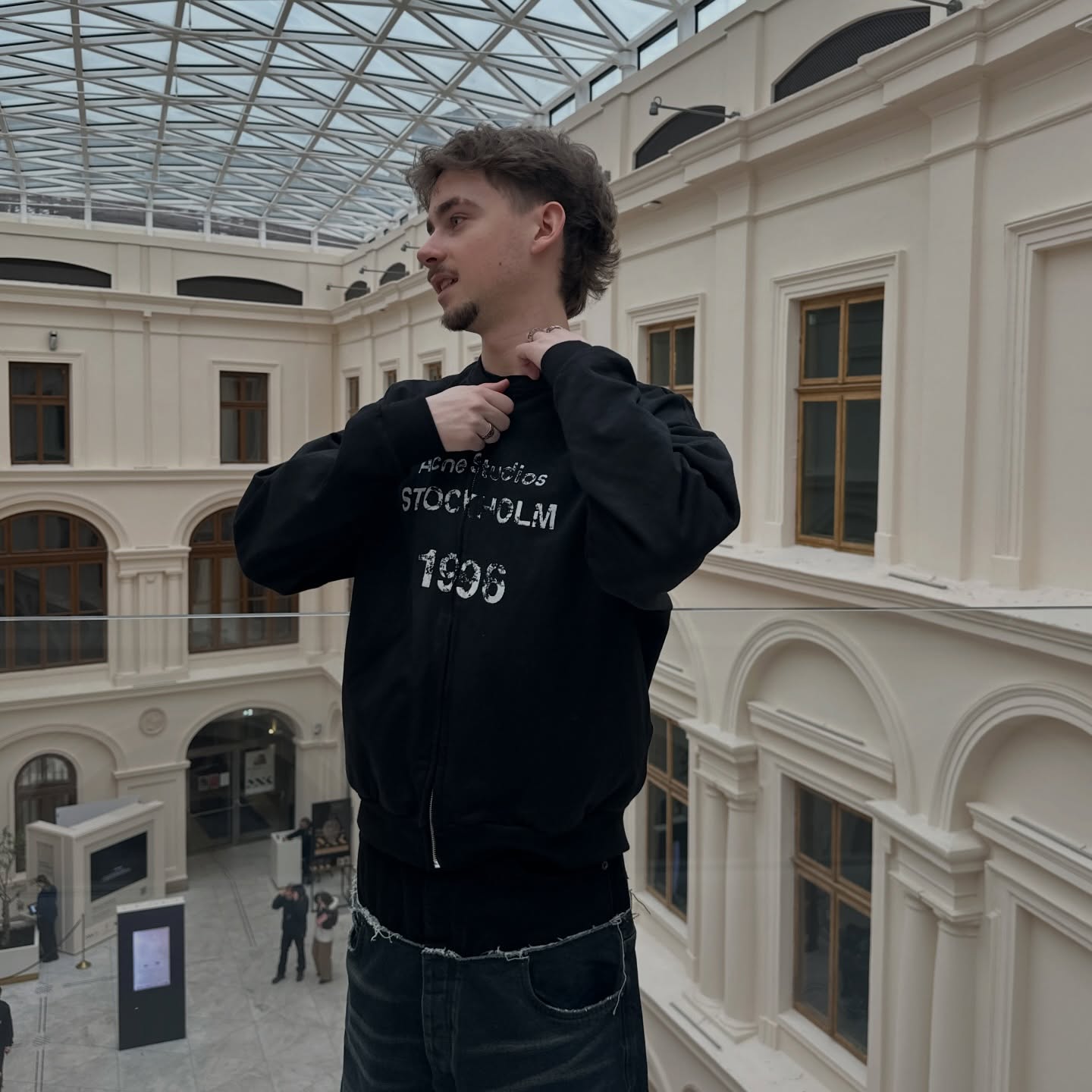

Over the past year, Era’s presence on WAVS has been hard to ignore. A steady stream of high-performing packs, a viral sample that climbed to the top of the charts overnight, and a producer title credit on Kidwild’s “Job’s Not Done” — he’s built the kind of run that makes other creators pay close attention.
But none of it happened by accident. Behind the consistency is a producer who thinks in systems: analyzing what works, understanding why, and pushing sounds to their structural limits before moving on. His real name is Jamie van der Velden, and he’s been at it since he was 15.
We sat down with Era to talk about trend analysis, music theory as a competitive edge, building a brand that earns you better deals, and why individuality still beats AI in the long run.
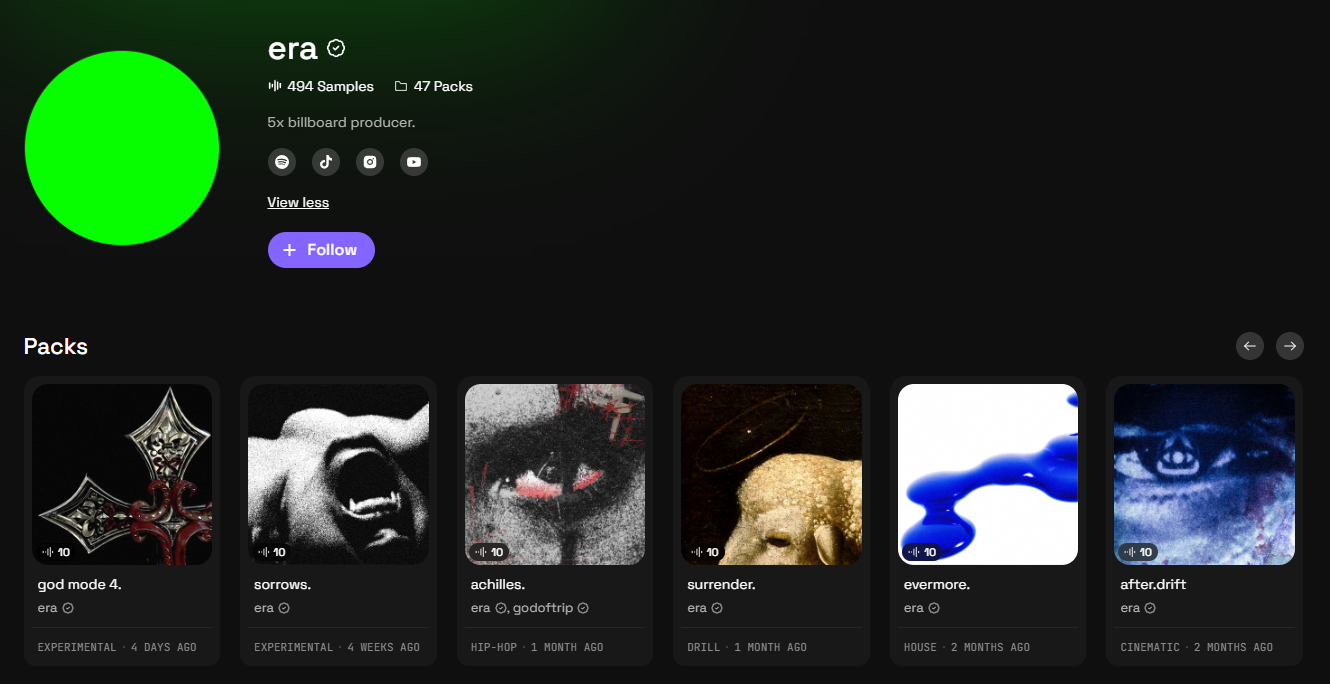
Era’s WAVS profile
Q: For people discovering you for the first time, who’s Era and what shaped your journey into becoming the producer you are today?
Era: Era, born Jamie van der Velden, is a record producer and sample maker who started his music journey at an early age.When I was 8, I got an electric guitar for my birthday because I wanted to become a rockstar. My idol was Ace Frehley from KISS. After a year or two I quit lessons because it didn’t really feel like it was for me.
Around 12 or 13 I discovered FL Studio after buying a Launchpad MIDI controller. From that point on I started using Fruity Loops maybe once or twice a month, but nothing serious since I barely knew how to use it. That changed when someone told me I should try selling my beats online. I got into this industry around 15 or 16 and since then I never stopped creating and publishing. Over the years I moved from making beats to focusing on samples and eventually becoming a respected industry producer.
Q: You’ve been the top-performing creator on WAVS over the past year. What do you think actually propelled you and your sound so far ahead of every other creator?
Era: I think one of my biggest strengths is that I’m very good at analyzing trends and understanding why something works. When a certain sound starts performing well, I don’t just copy it. I break it down. I look at the chord structures, the melodic movement, the sound selection, the emotional tone, the arrangement. I try to understand the theory behind it and what actually makes it connect with people.
Because I have a strong foundation in music theory, I can see patterns quickly. And because I’ve been producing for so many years, I can translate that analysis into something practical almost immediately.
What I really try to do is push a trend to its boundaries. I take the core idea that works, then stretch it further. More emotion, more tension, more clarity, more impact. I refine it until it feels like the most extreme but still usable version of that sound.
That combination of theory and practical skill allows me to move fast and stay ahead. I’m not guessing. I’m building with intention. At the same time, I stay consistent. I create a lot, test a lot, and improve daily. But the main thing is understanding what works structurally and then pushing it beyond average.
Q: It’s clear you have a signature sound. How do you balance creating music that feels inherently like you with making music that aligns with what’s currently in demand?
Era: For me it’s actually fun to analyze a certain sound or trend and pushing it to its creative boundaries. That way I can give it my own twist while still keeping it authentic. Sometimes I fall in love with a new genre and want to create more and more of it. Sometimes it doesn’t stick. I’m also a big believer in finishing something even if you’re not the biggest fan of it, because someone else might be.
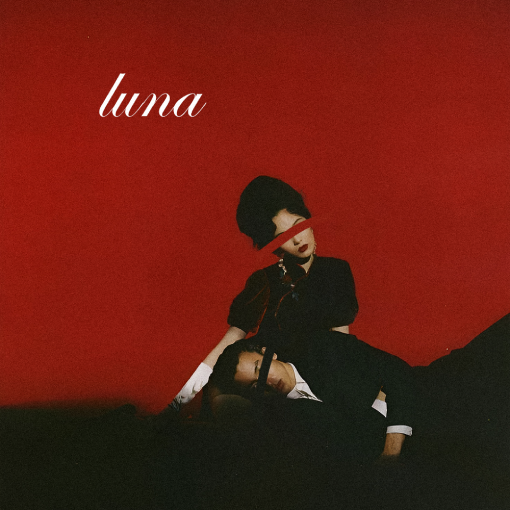
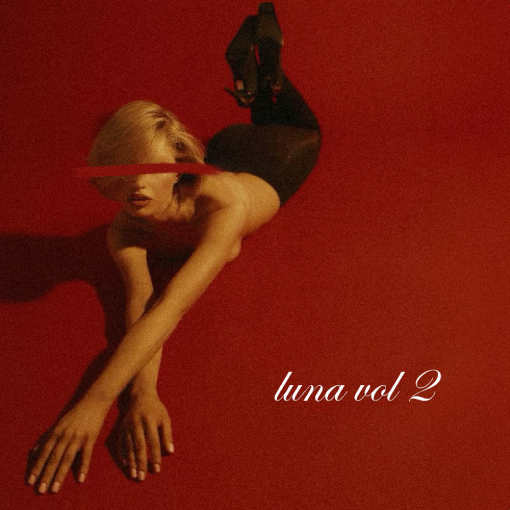
“Luna” is a two-volume sample pack series that started Era’s still-ongoing run
Q: Is there a specific technique, VST, or approach in your workflow that you believe could improve everyone’s sound?
Era: I feel like music theory is really undervalued in this modern bedroom producer era. Of course you can create beautiful music without proper theory knowledge, but relying on luck every day didn’t sit right with me. I was always interested in learning the theory behind music, especially when I started noticing patterns in the MIDI I was creating.
Basically I was implementing theory without fully knowing how it worked. That pushed me to really learn and understand it. This took me a lot of late nights where instead of working in FL i was reading and trying to understand theory, maybe not the sexiest thing to do but this is what helped me… By doing this I learned how to connect the patterns I noticed to the actual theory behind them.
Co-produced by Era
Q: Your sound feels cohesive. Are there particular instruments, VSTs or processing choices that define your sound?
Era: I like to save effect buses for later workflow use. That way I can maintain a similar sound in a new sample without rebuilding the same chain again. I also use this creatively. For example, if I build a guitar effects chain in one project, I might try it on a vocal or synth in another project just to see what happens.
I use Analog Lab V a lot because it has a wide range of sounds, from digital synths to more organic instruments. I usually just browse random presets until something catches my attention. I’m also a big fan of Universal Audio Verve Analog Machines. It’s a tape emulator that I use on almost all of my samples.
Q: You recently had a record with TyFontaine. What was the story behind that track coming together?
Era: It was crazy to see that record happen because I was listening to TyFontaine over five years ago. He’s not as big as he used to be, but it was still nice working with someone I used to be a fan of. Rio texted me saying it was used by Ty and they wanted to release it officially. The sample was made together with my good friend Red Wins, who recently also joined WAVS.
The sample stands out because of the catchy emotional vocal hook by Redwins and the mellow but emotional pads underneath. It’s actually a simple sample, but it captures a clear emotion. That’s probably why it got picked for the record.
Co-produced by Era
Q: From your experience, what actually separates samples that get placed from ones that are equally as amazing but never make the cut?
Era: For me it still remains a mystery sometimes.
One thing that really helps is working more with percussion or drum loops in the sample to give a feel for the beat that could be under it. It kind of creatively guides the producer. Another thing that works well is analyzing samples that performed better or got placed and looking at their arrangement and compositional structure.
Then you can create more samples in that same style or structure. That way you can build your own kind of hit formula based on your own sound. But there are still samples that feel like they won’t perform well and suddenly they land a big song. In the end we’re all humans with different taste and we hear different things in music.
Q: You’ve always been focused on building your personal brand. How important is branding for producers?
Era: Over the last year and a half I’ve really been focusing on my brand and image together with my manager Giomero Brand (no pun intended). I think branding is one of the most important things when it comes to putting yourself out there and being taken seriously in the industry. A strong image can lift your level of respect far beyond just the music part of the business.
People want to buy from someone they know and recognize. Even if your samples are insane, they can lack human connection without a face behind them. Branding also changes how you negotiate with labels and artists. Leveraging brand and public image can help you position yourself better in a deal, leading to better terms or even a main title feature.
A good example is the song “Job’s Not Done” by Kidwild feat. Era. A title credit like that is rare for a producer in the UK, let alone a sample maker. I think the combination of me and Giomero, the business side and the music side, is a combination that is very impactful. What is fun to see is that every deal I gain more knowledge about the business side of music, i hope that I can inspire other producers to have a more business view on music as well.
Produced by and featuring Era
Q: Speaking of “Job’s Not Done”, the “la luna” sample climbed to the top of the WAVS charts incredibly fast and soon after cemented itself as the most downloaded sample on the platform. It was everywhere, not just on WAVS but across TikTok and Instagram, and now it has found its home in Job’s Not Done by Kidwild, featuring you. What’s the story behind the song? How did it come about? Was it a long process to get it released, and was it difficult to be featured as an artist on the track, given how controversial that can sometimes be for producers?
Era: It was a very exciting moment because it amplified the momentum I already had, times ten.
The creation of the sample started after I was at the gym listening to a UK rap playlist around February last year. I got really inspired by the sound, especially the beautiful samples that are so characteristic of that scene.
At the same time, I had a songwriting camp trip to Italy planned for the following month, so I got heavily motivated to combine both worlds into one. Italian vocals with UK-style sampling. That contrast really excited me. I shared a full creative breakdown of the sample on my YouTube channel, showing step by step how I created it.
I created the sample and had a gut feeling that this one was going to do numbers. I made content around it for Instagram and TikTok, and in one night it blew up on both platforms. I immediately rushed to also upload it to WAVS. Within 24 hours it was at the top of the trending samples. That honestly blew me away because I had never seen something move that fast before.
Over time I started seeing a lot of beats being uploaded to YouTube using the sample. The genres were extremely diverse, going from UK rap to 21 Savage style beats, boom bap, Detroit and more. That really amazed me, seeing how one sample could lead to so many different outcomes. Eventually, together with my manager, who focussed on the business side, we were able to turn that momentum into the official release of “Job’s Not Done” by Kidwild featuring Era.
Q: Do you see AI in music as something to embrace or something to be wary of?
Era: When it comes to music for consumers, I think individuality will matter the most in the long run. I don’t think AI is going to take over that space anytime soon. For more corporate projects, AI will probably take a bigger role because money and efficiency matter more there. I think it’s good to learn how to use AI as a tool to improve your music. It can give you new ideas and creative sparks. Of course it can be abused, but I don’t see it hurting the music market anytime soon in its current state.
Q: Looking ahead, what are you trying to build creatively over the next few years?
Era: As briefly mentioned before, the brand I’ve built is something I’m genuinely proud of. I’m happy that I’m not fully relying on selling packs and chasing placements, because there’s a cap to that model and it’s difficult to sustain long term. I’m starting to work more and more with bigger artists in session settings as well. At the same time, the more success and knowledge I gain, the more I realize that I want to have a bigger impact on the music industry overall.
That impact could come from helping artists and producers find their space in the industry and guiding them in building their careers. A lot of what I’m doing right now goes against traditional industry standards, so sometimes you have to rewrite the rules. Hopefully, that leads to redefining the standards as well.

sample Era’s catalog here.