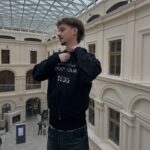
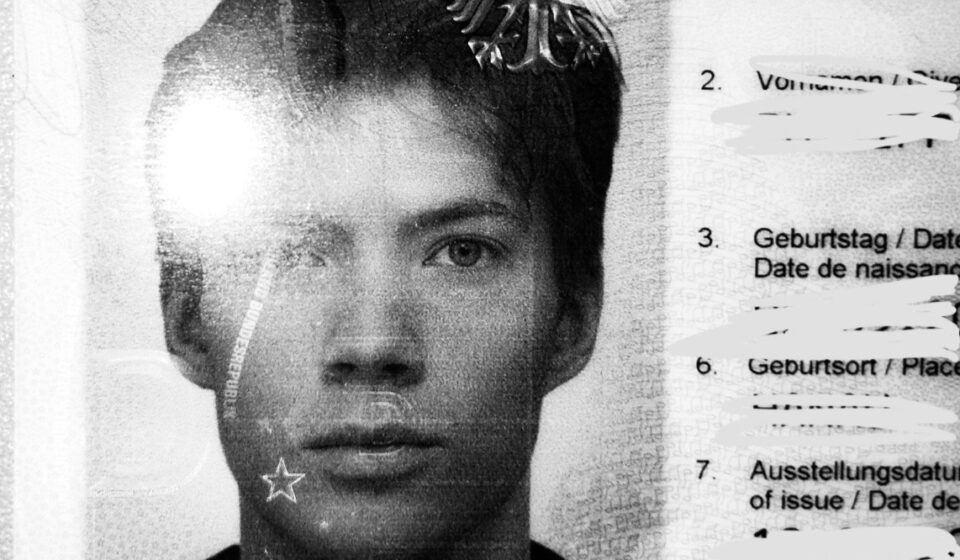

Swisher doesn’t believe in hiding things behind effects. Saturation, EQ, maybe some reverb, and that’s about it. It’s a philosophy that runs through everything he does, and it’s probably part of why his samples connect the way they do.
The Berlin-based producer was listening to Pop Smoke’s Shoot for the Stars Aim for the Moon as a fan when track 7 came on, and the sample that came through was one of his. No one had told him. He heard it when the rest of the world did. The album was Pop Smoke’s first posthumous release, dropping in 2020, about a year after Swisher had decided to take producing seriously.
Since then, he’s worked with Chris Brown, Ken Carson, Reezy, Ufo361, and others, all while keeping sample creation at the center of his work.
We caught up with him on his process, his tools, and where he’s headed next.
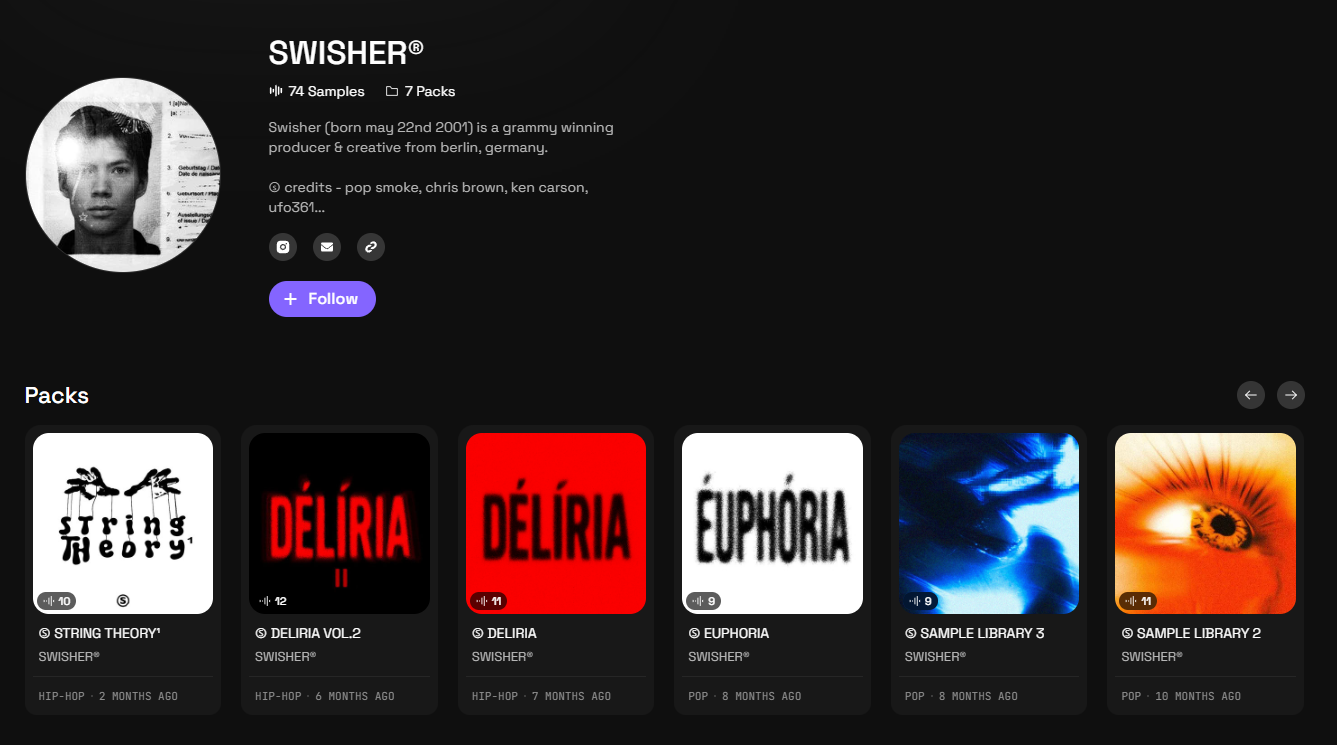
Swisher’s WAVS profile
Q: A brief introduction: Who is Swisher, both personally and as a producer?
Swisher: Swisher, also known as Philipp Riebenstahl, is a producer based in Berlin, Germany.
I originally come from the Frankfurt am Main area. I’ve been playing guitar since I was six, and thanks to my dad, I was always surrounded by music growing up. Early influences ranged from bands like Radiohead and Nirvana to artists like Dr. Dre and Eminem. Music was always a big part of my life, even though becoming a producer wasn’t something I had consciously planned.
Around the age of 16, I got into FL Studio through gaming. I randomly came across it on a very trustworthy website (where you could definitely download everything 100% for free legally) and decided to try it out, without really knowing what it was or what you could do with it.
I got hooked instantly. From that point on, I was making beats almost every day, and that hasn’t really changed since. FL Studio became my way of expressing and channeling my fascination with music. I started out focusing on drums, but quickly realized that melodies and the vibes behind them were what really pulled me in. At the same time, I saw it as a way to get into the industry, especially since the feedback I was getting from other producers made me feel like I was on the right path. In
2019, I started sending out my first sample pack to other producers. For about six years, I focused almost exclusively on making samples. Today, I’m active both in sessions with artists as a producer for full instrumentals, as well as a mixing and recording engineer, but creating new samples is still what I’m most passionate about at heart.
Q: You’re a Grammy winning producer and you have a bunch of records under your belt: Pop Smoke, Swae Lee, Polo G, Chris Brown, AJ Tracey, Luciano, Coi Leray, Roy Woods, Ufo361 and Ken Carson… You even have a Lil Wayne record that many people might not know about. Which one of your records is your favorite one and why?
Swisher: My favorite song out of the ones I’ve worked on, that’s a really tough question.
Emotionally, it’s the obvious choice: Pop Smoke ft. Swae Lee – Creature. The song came out in 2020, about a year after I decided to really take producing seriously. Hearing music I created on an album by such a huge artist and one of my personal favorites. Was an unreal feeling. That song was my entry point into the industry, so it will always hold a lot of emotional value.
From a purely musical standpoint, I’d say “LICHTER AUS” by makko & Miksu/Macloud. It’s a German track that touches on a very important and heavy topic, while also using one of my all-time favorite samples.
“RICK OWENS” by Ufo361 & Ken Carson is also very high on the list. I think the sample I contributed to that song is really special. Ufo361 had a big influence on my sound between 2016 and 2020, so hearing him on something like that, together with Ken Carson, was another crazy moment for me.
Q: You produced on Creature by Pop Smoke and Swae Lee on Shoot For The Stars Aim For The Moon. That was Pop Smoke’s first post-humous album and most producers have an interesting story to tell about their work on that album. Is there a story behind your own involvement as well?
Swisher: I had no idea about the song at all until the album dropped. I listened to it as a fan. Pop Smoke was my absolute favorite artist at the time. When I got to track 7, I immediately thought, “wait… that’s my sample, isn’t it?” and completely lost it.
My manager at the time, PittThaKid, had sent some of my ideas to 808Melo, which is how the song came together. That record opened a lot of doors for me and gave me the opportunity for people to really start paying attention to my work.
Co-produced by Swisher
Q: What does your processing chain look like? Or rather, what are some must-have tools or plugins you love using in most of your work? Are you into pedals/analog stuff, or do you lean more toward digital tools and plugins?
Swisher: I know it sounds cliché, but I truly believe that less is more when it comes to sample making.
I like to keep my processing chain simple and usually stick to the basics, some saturation, minimal compression, and EQ, that’s about it. I often use UAD plugins for that. When it comes to effects, I mostly limit myself to delay, reverb, and occasionally some granular processing.
My mindset is: if the original sound already feels right, it doesn’t need much more. Audio that’s too drenched in effects often gives me the feeling that something is being hidden. Every element in my samples should have a clear role.
I’m generally a big fan of analog gear. I love synths like the UDO Super 6, Prophet 6, pretty much anything from Moog, and to me, nothing really beats real acoustic bass, guitar, or piano. I also have a small analog effects chain, but it’s definitely not a must-have. There are great alternatives from UAD, Native Instruments, Waves, and others.
That said, I do use synth VSTs as well, lately plugins like Luma, Diva, and Serum 2. But even with those, I like to treat them like outboard gear, meaning I render everything to audio pretty early and continue working from there.
If you’re chasing that real, raw sound though, I’d definitely recommend exploring the analog world if you get the chance. To me, it almost always ends up sounding a bit fuller and more high-quality.

“DELIRIA” is a two-volume sample pack series by Swisher, available to sample on WAVS.com
Q: If you had to choose one instrument VST and one effect VST to work with, which ones would you choose and why?
Swisher: I’d say Omnisphere 3 and FabFilter 4.
I started out making samples with earlier versions of both, so they still feel very natural to me and I honestly feel like I could do almost everything I need with just those two.
Q: You haven’t been on WAVS for long, but all your packs have performed incredibly well. What do you think makes a sample great? Is there a formula to consistently making samples that people want to use, and even further – do you think there’s any sort of logic behind the samples that end up getting placed?
Swisher: I’m really glad people connect with my samples the same way I do.
I don’t think there’s a single formula for what makes a sample great. It’s probably a mix of having a strong taste that resonates with others, along with an understanding of music theory and sound selection that brings everything to life.
From my experience, simpler ideas tend to work best for Hip-Hop and Trap. In other genres, more complex or fuller samples and ideas can work.
But overall, what they usually have in common are clear melodies, strong ideas, and a clear sense of direction behind them.
Co-produced by Swisher
Q: With the increase of AI in music, it has undoubtedly seeped itself into samplemaking as well. How do you feel about AI in music, and do you see yourself using it more or less in the future?
Swisher: I’m not a fan of generative AI in music.
Having entire complex chord progressions, melodies, and rhythms generated from a simple prompt feels morally and legally questionable to me and also uninspiring and unfulfilling.
That said, I’m open to using AI as a tool to work with existing material, for example, swapping out instruments in a melody. It can open up access to sounds you wouldn’t have had otherwise. But even there, the line between using it as a tool and letting it do too much of the work is very thin.
We probably won’t be able to avoid incorporating AI into parts of the workflow, but it’s important to never stop questioning generative AI.
Make Up Your Mind by Chris Brown: the song that won Swisher his first Grammy award for Best R&B Album in 2025.
Q: What’s next for Swisher? What do your next 3 to 5 years look like? Is it all music, or do you see yourself branching out and branding out into other avenues as well?
Swisher: I’m really proud of what I’ve been able to build over the past few years, especially with my samples, the success I’ve had and, more importantly, how much I’ve genuinely enjoyed the whole process.
At the same time, I’ve realized that samples are just one part of what I want to do. Even now, I’m already expanding beyond that. I’m spending more time in sessions with bigger artists, gaining a lot of valuable experience and insight into the industry, especially as it continues to evolve. I’m being exposed to new, modern approaches and perspectives that more traditional or older structures often can’t fully support.
I’m already starting to share that knowledge, alongside my samples and ideas, on my Patreon, but in the future I want to grow that much further. My goal is to give producers the kind of guidance and space in the industry that I wish I had when I was starting out.
It’s something that will take time, but it’s a true passion project for me and definitely a big focus for the next few years.
sample swisher’s catalog here.