
La Remontada. Or, “The Comeback”. It’s a recurring phenomenon in music and the arts. Artists often walk away, sometimes for years, and return wanting to reinvent themselves all over again. Grander, Greater, Better. And few seem to do that successfully.
We really find obac particularly interesting because he’s one of those people. He likes to deeply assess, observe, explain, create. He shows that in his content as much as in his music. A person that observes others so well, is often skilled in creating grand worlds of their own. And does it again, and again, and again. Grander, Greater, and Better.
Preguntando se llega a Roma, or, By asking, you find your way to Rome. Obac spent two years taking other producers’ records apart in public before he sold a single sample of his own, which is an unusual order to do things in, and by the time he arrived on WAVS a couple months ago he had spent longer than most people thinking about why anything works.
He is at number one now, with 11 releases and 133 samples behind him. His 84,000 YouTube subscribers are largely unaware of it, simply because he never mentioned it to them (we hope he will now).
We had a great, long conversation with obac, talking in-depth, hearing about the four years he spent away from music, what taking apart other people’s records taught him about trusting his own instincts, and so much more in what might be our most detailed interview with a WAVS creator yet. Enjoy our full-of-gems conversation.
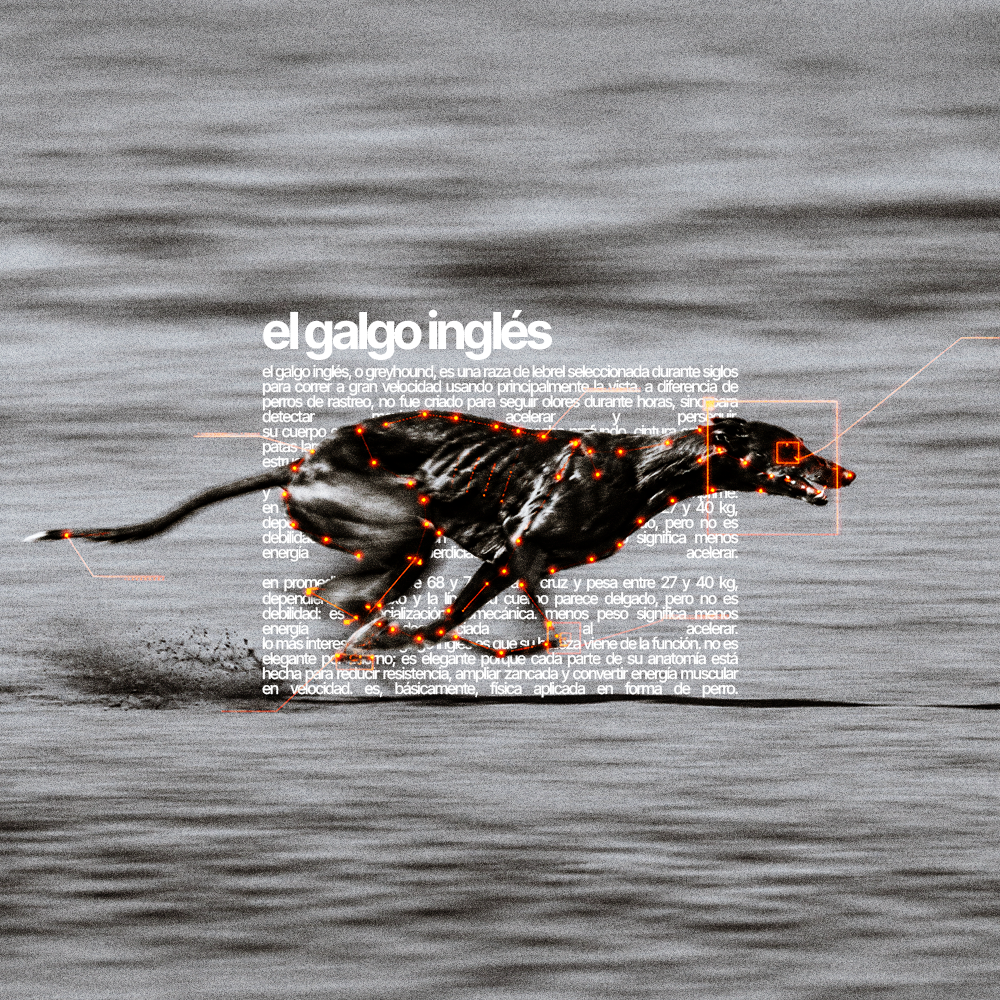
el galgo inglés /// a sample pack by obac
Q: For people discovering you for the first time, who’s obac? Where are you from, how long have you been making music, and what originally pulled you into production?
obac: I think obac is more than just an artist. At the end of the day, it’s simply the part of me that gets to do what I love. Whether that’s making music, creating content, teaching, or helping other producers, I’m incredibly grateful that I get to spend my life doing things I’m genuinely passionate about. That’s what obac represents to me.
I’m from Mexico, but probably not the part most people picture. I grew up in one of the country’s smallest states, surrounded by a slower and quieter environment. Even though I don’t live there anymore, it’s still the place I go back to whenever I need peace. Growing up there definitely shaped who I am. I fell in love with calmness, and I think that carries over into everything I create today.
If I count the years I’ve actively been producing, it’s been around seven or eight years. I first discovered music production in 2012-13, took a break for personal reasons around 2015, and then came back to it at 19. I’ve been producing ever since. What’s funny is that I’m answering this interview the day before my 26th birthday, so being featured as a WAVS Creator Spotlight almost feels like an unexpected birthday gift from the universe.
As for what got me into production, I always joke that I’m an EDM baby. I grew up during the golden era of electronic music (the peak of Tomorrowland and that whole movement) and that’s what sparked everything for me.
It all started with Skrillex. I was around 13 years old when a classmate showed me “Rock N Roll”. Up until then, music was something I associated with guitars, pianos, and traditional instruments. Hearing that track completely changed my perspective. I couldn’t understand how those sounds were even possible.So I went home, opened the now-extinct (I think!) Yahoo Answers, and searched, “How does Skrillex make music?” Someone confidently replied, “FL Studio.” (It wasn’t even true, he was producing in Ableton) but at 13 years old, I believed it without question. I downloaded FL Studio, became obsessed with learning production, and the rest is history (ironically, I’m an Ableton user now btw).
Q: Outside of your work on WAVS, you’ve built a following of over 80,000 subscribers on YouTube, where you make video essays about music and creativity. The channel has gone through a real evolution too, starting with FL Studio tutorials, moving into breakdowns of why the production of artists like Dillom, NSQK, Milo J and Duki works so well, and these days leaning more into ideas around creativity and the fear of starting. What drove those shifts, and how has building that audience changed things for you as a producer?
obac: First of all, I’m honestly surprised by the level of research behind this question. That’s something I really appreciate.
As for YouTube, I think I’ve said this many times before: one of my biggest fears in life is not changing. One of the scariest things I can imagine is waking up five years from now and realizing I’m exactly the same person I am today, especially mentally. I try to avoid saying things like “always” or “never” because I believe the beauty of being human is that we’re constantly evolving. And I think that desire to evolve naturally shows up in my work.
That’s really what has driven all those shifts on my channel. They came from not wanting to stay in the same place creatively. A friend of mine recently told me she loves being “not niche,” especially now that everyone talks about finding a niche online. I actually relate to that a lot. Human beings are far too complex to fit neatly into a single box, so I’ve never wanted my channel (or myself) to be defined by just one thing.
Building an audience has also changed me as a producer in ways I never expected. When you’re focused solely on music production, it’s easy to think only about your own goals and milestones. But growing a community teaches you empathy. It teaches you to think about how to communicate ideas so other people can understand them, how to create things that genuinely help others, and how to listen to what your community actually needs.
Over time, that completely changed the way I see my career. I realized this journey isn’t an individual one, it’s a shared one. More than anything, building a community has made me much more sensitive to the people on the other side of the screen. It reminded me that community will always matter more than individual success.
“How to destroy your need for external validation?”, a video essay by obac
Q: You’ve spent a lot of time analyzing other people’s production and explaining why it works. Has doing that actually made you better at making your own music, or are those two completely separate skills? Is there anything you’ve learned from breaking down someone else’s record that you now use in your own samples?
obac: I’m not sure whether it’s made me a better producer or not, because I don’t really like thinking in absolute terms. I mentioned this in my previous answer, words like “better” or “worse” rarely capture something as complex as creativity.
A big part of who I am is being curious. During the break from music I mentioned earlier, I actually decided to study something related to science because I’ve always been fascinated by understanding why things work. Even now, that curiosity is still a huge part of my personality. Why does a song connect with people? Why does a certain sound create a certain emotion? Why does one idea work while the other doesn’t? I probably ask “why?” more than any other question.
So whether analyzing music helps or not really depends on the person. Some people experience art by simply feeling it, without needing to explain it. Others enjoy taking it apart and understanding every little piece. Neither approach is better than the other. For me, though, analysis brings me peace because it satisfies that curiosity.
Ironically, one of the biggest lessons I’ve learned from analyzing other artists is almost the opposite of analysis itself. The more I break down great records, the more I realize that many incredible creative decisions weren’t overthought at all. There was intention, of course, but there wasn’t an obsession with justifying every choice. People were simply creating.
That realization completely changed the way I approach music. It taught me to embrace creative accidents instead of trying to control everything. Knowledge is incredibly valuable, but only as long as it stays a tool. The moment it becomes an obsession that prevents you from creating, it starts working against you.
Art isn’t science. Curiosity can guide your process, but at some point you have to stop analyzing, trust yourself, and let the music happen.
Q: Let’s get into the sauce. Your WAVS catalog covers both melodic compositions and drums, which not a lot of creators do. What does your process look like on each side, and are there any techniques, VSTs or workflow habits you’d recommend that could instantly level up another producer’s sound?
obac: Tbh I probably enjoy making drums a little more. I think that’s because I grew up in Latin America, where so much of our music is rhythm-driven. Salsa, bachata, reggaeton, cumbia, even Corridos, rhythm is at the center of everything. I think growing up surrounded by those genres naturally shaped the way I hear music and made me fall in love with drums.
When I’m designing drums, everything starts with a concept. I try to imagine the producer who’s going to use the sound and the kind of beat they might make with it. Then I literally turn on the metronome and start making little mouth noises or tapping rhythms on my desk. Eventually I translate those rhythms into my DAW. I’m actually a pretty slow producer, so that process usually takes me a while.
As for plugins, I’m honestly a huge fan of Ableton’s stock devices. I use Saturator, Glue Compressor, and a lot of the native effects. If I had to mention one third-party plugin, it’d be Tone Architect, and, of course, a good clipper.
Melodies start almost the same way: with a concept. One thing that really helps me unlock ideas is sound design. Like I mentioned before, I’m an EDM baby, so I grew up learning synthesis through plugins like Massive, Sylenth1, and later Serum. Designing sounds almost feels like a warm-up for me. Once I start creating patches, musical ideas usually begin to appear naturally.
Serum is probably my most-used plugin of all time. If we’re talking about effects, though, I still lean heavily on Ableton’s stock devices. I use Delay, Redux, Chorus, and a lot of the built-in effects because they’re genuinely great. Occasionally I’ll use Serum FX, but that’s about it.
More than any plugin, I think what has helped my sound the most is learning to build things from scratch. Whether it’s a drum or a synth patch, creating the sound yourself teaches you so much about why it works, and it gives your music its own identity.
“How to succeed when you’re interested in too many things?”, a video essay by obac
Q: There’s a thread running through your packs that’s hard to miss once you notice it. Running horses on your channel banner, packs called “el galgo inglés,” “el doberman,” “la remontada,” samples named “zancada,” “impulso,” “octane,” “tiempoextra.” There’s a lot of movement and competition in there. Is that intentional, and where does it come from?
obac: Honestly, it wasn’t something I planned, but once you pointed it out, I realized there really is a pattern. The funny thing is, I don’t think it’s actually about competition as much as it is about movement.
Competition was a huge part of my life growing up. As a teenager I played basketball competitively and even represented my state a few times. It taught me discipline, but it also gave me a very strong competitive mindset. Eventually, though, I realized that taken too far, competition can become unhealthy. It tends to make you think individually, if you win, someone else has to lose.
That’s one of the reasons I fell so deeply in love with art. People often talk about competition in music, but I don’t really see it that way anymore. To me, art is much more about community than rivalry. It’s about expression, collaboration, and connecting with people.
What really fascinates me is the idea of movement. Throughout my life, I’ve had periods where I got stuck (overthinking, doubting myself, or simply not taking action) So one of the biggest lessons I’ve learned is that movement is often more important than certainty.
You can make mistakes. You can fail spectacularly. But as long as you’re still moving, you’re giving yourself a chance to grow.
That idea has quietly found its way into almost everything I create. Whether it’s a horse running across a banner, a pack called La Remontada, or sample names like Impulso, Zancada, or Tiempo Extra, they’re all reminders of the same philosophy: keep moving.
I mentioned earlier that one of my biggest fears is staying the same person forever. I think movement is the antidote to that. I can reflect, I can question everything, I can even overthink, but as long as I keep walking forward, I know I’ll eventually end up somewhere better.
Q: You’ve been on WAVS for around three months and you’re already holding down the #1 trending spot with 11 releases behind you. What do you think has actually propelled you there? Is there a real strategy behind the consistency, or has a lot of it come down to the audience you’d already built coming with you?
obac: This is actually kind of funny because I think this interview is going to be the way a lot of my audience finds out I’m even on WAVS. For some reason, I’ve never actually announced it on my YouTube or Instagram. I’m a bit introverted when it comes to promoting myself. So if you’re reading this because you know me from YouTube or Instagram… holaaaaaaa
As for reaching the #1 spot, I honestly think the first reason is my friend ReeMau. He’s also a creator on WAVS, and he’s actually the person who pushed me to join. He saw potential in what I was doing and encouraged me to take this step. So honestly, I think it starts with having good people around you. ReeMau, if you’re reading this, I love you, man. You’re a very important person in my lifeeeee.
Beyond that, If I had to point to one thing, I’d say it’s curiosity.I genuinely believe that the right questions take you to the right places. Creating content (especially long-form YouTube videos) has trained me to analyze everything. Why does this work? Why do people connect with this? Why does one idea stand out while another gets ignored? Over time, you become much more sensitive to patterns.
I think that’s one of the most valuable skills I’ve developed. The more you analyze, the more you start recognizing what people need, what captures attention, and what makes something memorable. My curiosity (and maybe my love for patterns in general) has helped me a lot in that regard.
There’s a saying in Spanish: “Preguntando se llega a Roma,“ which roughly means, “By asking questions, you’ll find your way to Rome.” I also have another saying: “There are no dumb questions, only dumb people who don’t ask them.“ The wording might be a little harsh now that I think about it jaja, but I genuinely believe the idea behind it. Every question is worth asking. What’s really a shame is staying stuck with a question just because you’re afraid to ask it.
The other thing I’ve learned is that you can learn from absolutely everyone. Every creator on WAVS has taught me something. Maybe it’s how they design drums, how they present their work, how consistent they are, or how they communicate with their audience. You have to leave your ego at the door and accept that knowledge can come from anywhere.
If there’s any strategy behind what I’ve done so far, it’s probably just that: stay curious, ask questions, analyze everything, and never assume you’ve got it all figured out.
galería de arte /// a sample pack by obac
Q: You once asked your YouTube audience what it would take for beatmaking culture in LATAM to explode the way it has in the US. What’s your own answer to that question, and where do you see yourself fitting into it?
obac: Okay, we got deep with this one jaja. But honestly, I think the answer is a combination of many different things.
It’s actually a difficult question for me because watching something you love grow in a limited way in the place where you grew up can be a little bittersweet. I have no doubt about the amount of talent that exists in Latin America. Some of the most talented people I’ve met are from countries all across the region: Puerto Rico, Argentina, Chile, Guatemala, Mexico, and so many others. The talent is absolutely here.
I think the first challenge is opportunity. The economic reality in Latin America is different. Of course, every place in the world has its own struggles, but here, for many people, buying a $100 plugin, a course, or even having access to a powerful computer is not just a creative investment, it can compete with much more essential needs. So I think access and opportunities are a huge part of the conversation.
I also think there’s something we, as Latino creators, need to reflect on. And this might sound a little harsh, but I think many creators (including myself) have a responsibility to think about what we’re contributing to the culture. Sometimes content can become more focused on selling than on genuinely sharing knowledge and building a community. And there’s nothing wrong with building a business; I actually think entrepreneurship is a beautiful thing. But I do think there’s a difference between creating because you truly want to teach and connect with people, versus creating only as a path to conversion.
I’ve talked about this a lot with my friend ReeMau (shoutout to my broo again), who’s also a creator. Sometimes you can almost feel when content is built around a hidden sales pitch rather than a genuine desire to share something. I think the challenge is finding a balance where creators can build sustainable careers while still protecting the authenticity of the community they’re creating.
And maybe the hardest part is the way art is sometimes viewed culturally. At least from my experience in Mexico, there’s still a lot of stigma around pursuing art as a career. I actually stopped making music between the ages of 15 and 19, which was the period when I had to think about what I wanted to study, because I constantly heard things like, “You’re not going to eat from that,” or “Art isn’t a real career.”
When you hear that enough times, it shapes the way you think. It creates fear, and I believe it’s hard to fully commit yourself to something when fear is always present. You start creating with one foot out the door because you’re already preparing yourself for failure.
So I think changing that culture is also part of the process. People need to see that art can be taken seriously, that creative careers are possible, and that artists deserve support.
As for where I see myself in all of this, I think my role is simply to take responsibility for what I create and how I communicate. I want to create genuine opportunities, share my passion for music, and hopefully help close some of those gaps little by little.
Maybe I won’t change everything, but if something I do helps even a few people believe they can pursue this path, then that’s already meaningful. I think culture changes slowly: one person, one idea, and one opportunity at a time.
sonder drums; sonder drums v2; // drum packs by obac
Q: What’s next for obac? What does the rest of this year look like, and how do you see the next three to five years shaping up? Are you planning on staying mostly in samples, or are there bigger ideas you’re starting to build toward?
obac: For me, the next step is continuing what I’m already building: finding more professional stability, emotional stability, and continuing to grow as a person.
For the rest of this year, I want to keep creating samples and really establish obac within the music space. I also have a few ideas and projects that I want to start developing, but more than just building something successful for myself, I want this journey to eventually give something back to the community that has supported me.
Right now, I feel like I’m in a foundation-building stage.
Looking five years ahead, I hope to start building things beyond music as well. A life with peace, surrounded by the people I love, is just as important to me as anything I achieve professionally. I love music, but music isn’t my entire life. I make music, but music doesn’t define me. My identity is much bigger than what I create.
I think true success is being able to find happiness both inside and outside of music. Growing as an artist matters, but growing as a person matters just as much.
If there’s one message I would like to leave people with, it’s something my dad once told me. He’s a university professor, and while he was preparing a graduation speech, he shared an idea with me about three important values in professional life: the three Gs.
The first one is gratitude—being thankful for what you receive, but also for the things that don’t happen the way you expected. I think there’s always value in being grateful.
The second one is generosity—understanding that even though we are often taught that success is an individual journey, we can still support each other and grow together.
The third one is gentleness—being kind, respectful, and treating people well. You can choose to compete if that’s the path you want, but I believe you should always be kind to the person next to you.
That’s something I truly feel within the WAVS community. Honestly, admiration feels like too small of a word. Every time I listen to the work people are creating here, I’m amazed by the level of talent. I‘m genuinely happy that creators have a platform where they can not only earn from their work but also have opportunities to share their ideas and reach more people.
So yeah, keep creating, keep evolving, and remember the three Gs: gratitude, generosity, and gentleness.
A big shoutout Jower And ReeMau, my music brothers, to everyone reading this, and also to my parents. When I told them I was going to be interviewed, they were genuinely so happy, it was like I had won a Grammy jajaja.
Life is pretty amazing sometimes. Keep creating, everyone!

“la remontada”, a sample pack by obac
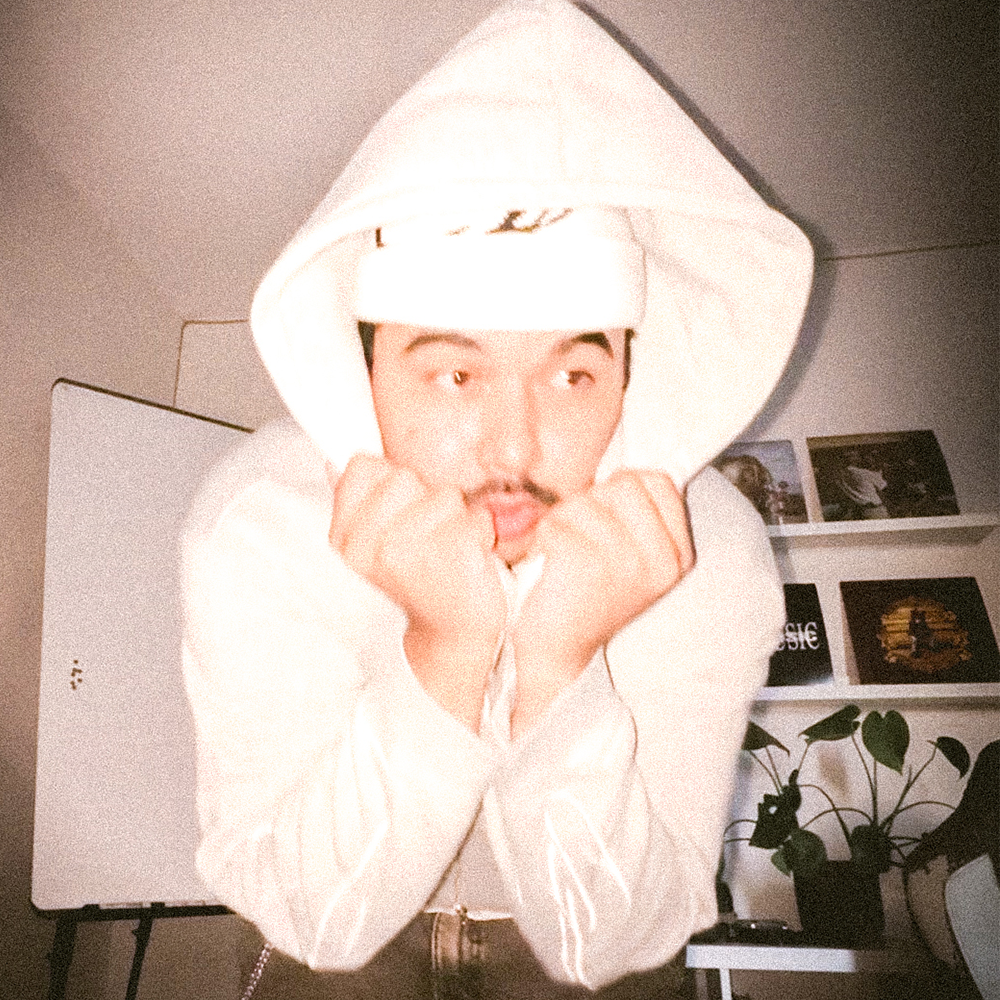
sample obac’s catalog here.